

The SHAKTI Study is a study by JIVINITI, the Research and Creative Communications Program of The Virsa Foundation, Inc.
SHAKTIThe SHAKTI Study
by JIVINITI

How we listened

How we listened

The SHAKTI Study was the first step in one plan. Research came first: The SHAKTI Study listened, then The GAIA Study measured. Story came next, in the documentary Third Degree Burnout – A Survivor's Guide. Action follows in Project reset., the film's educational impact campaign. This page explains how the listening was done, who took part, who did the work, how the women are protected, how we compare groups, and what five days of online diaries can and cannot tell us.

Where it all began

SHAKTI is where the plan began: research with The SHAKTI Study and then The GAIA Study, story in the documentary Third Degree Burnout – A Survivor's Guide, and action in Project reset.

Journey

Design

Five evenings, one question at a time

The SHAKTI Study was commissioned in June 2020 by The Virsa Foundation, Inc. and its JIVINITI Research and Creative Communications Program. It had four parts: a review of films, books and papers; 15 expert interviews in fall 2020; five-day online diaries; and nine follow-up video interviews.

The diaries ran from November 11 to 23, 2020, in the first year of COVID-19. There were three closed discussion boards, one for each community: Black, Latina and White women with low incomes, across generations. Closed means that no woman could see another's answers, so each could write without performing for the others. Each day had its own theme: Day 1 You, Day 2 Your world, Day 3 Nutrition, Day 4 Resilience, Day 5 Envisioning your best life. Women answered one question at a time, in writing and with photos, and a moderator replied with follow-up questions.

The study was exploratory. It began from a hope that plant-based eating might support emotional resilience. The diaries explored that idea. Later, The GAIA Study would test it.

Sample

76 recruited, 56 wrote, 42 completed all five days

Women were recruited as having lower incomes, with household incomes of about $20,000 to $75,000, and as interested in, curious about or open to better health. The women who wrote were aged 26 to 54 and came from 14 states, coast to coast: Texas (18), Georgia (7), Illinois (6), Pennsylvania (5), New York (5), New Jersey (3), California (2), South Carolina (2), Connecticut (2), and one each from Indiana, Arizona, Florida, Arkansas and Minnesota.

Of 76 women recruited, 56 left answers and 42 completed all five days. Those who left were not a random group: several were young mothers, and one woman stopped because the Day 2 questions felt too personal. Later days therefore rest on fewer women, and every count on this site gives its base.

Who did the work

The people behind the diaries

The SHAKTI Study was commissioned and is owned by The Virsa Foundation, Inc. and its JIVINITI Research and Creative Communications Program.

Nivi Jaswal-Wirtjes, MBA, NBC-HWC (Mayo Clinic)

Nivi Jaswal-Wirtjes, MBA, NBC-HWC (Mayo Clinic)

Lead Researcher; Founder and President, The Virsa Foundation, Inc.

Nivi Jaswal-Wirtjes, MBA, NBC-HWC (Mayo Clinic), is the founder and president of The Virsa Foundation, Inc. and its JIVINITI program, and the director and executive producer of the award-winning documentary Third Degree Burnout – A Survivor’s Guide. Before founding the Foundation, she built a global career in consumer behavior, strategy and communications across consumer brands, medical devices and life sciences, media, and research and advertising, working in Asia Pacific, Africa, the Middle East, Eastern Europe and North America. Working alongside the makers and marketers of packaged foods and beverages gave her an insider’s view of how what we eat is shaped long before it reaches the plate: by product design, price and the stories advertising tells. A Mayo Clinic-trained, board-certified health and wellness coach, she is also an ACLM Certified Lifestyle Medicine Coach and an IACTM-certified Jungian Wellness Coach. She connects the dots between burnout, food and planetary health.
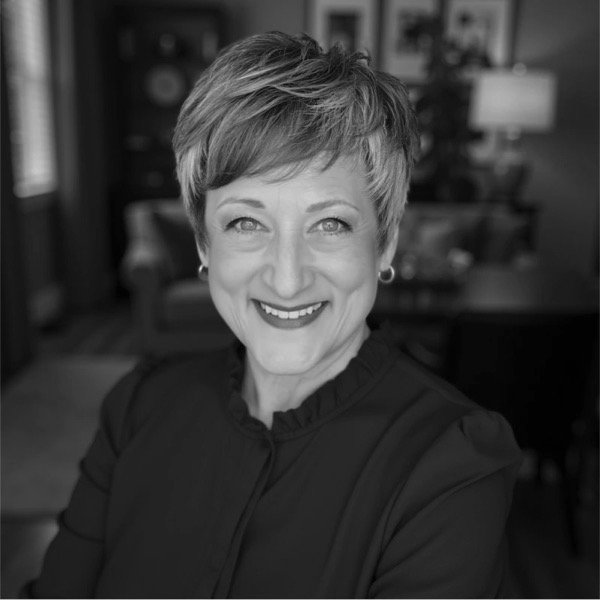
Susan Newhouse

Susan Newhouse

Lead Moderator and Research Designer; Principal, Susan Newhouse & Associates, LLC

Susan Newhouse is a consumer insights and innovation leader with more than 25 years of experience in qualitative and online research, concept development and consumer co-creation, working with Fortune 500 organizations across food and beverage, consumer goods, restaurants and other consumer industries. She is also a facilitator, trainer and coach in creative problem solving, design thinking and storytelling. For SHAKTI, Susan wrote the research design and moderated the five-day diaries, and she and Nivi Jaswal-Wirtjes conducted all of the expert interviews together.

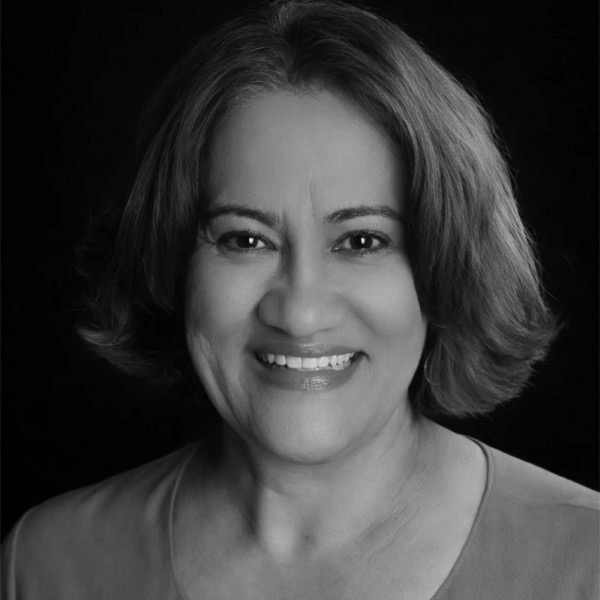
Marta Villanueva

Marta Villanueva

Hispanic Research Consultant and Moderator; Principal, NuThinking, Inc.

Marta Villanueva has spent more than 20 years helping brand teams turn qualitative insight into strategy, with deep expertise in Hispanic and U.S. Latino consumers. She holds a master’s degree in creative studies, has led more than 3,500 research sessions, and speaks regularly at QRCA, the Insights Association, IIEX and Quirk’s. For SHAKTI, Marta guided the study’s work with Latina women and moderated alongside Susan Newhouse.

Schlesinger Group (now SAGO)

Schlesinger Group (now SAGO)

Respondent recruitment and research platform

Schlesinger Group recruited the women who took part and provided QualBoard, the platform the diaries ran on. QualBoard kept every answer private and secure, and let the moderators talk with each woman one to one.

Going back to the source

Every answer, read again

The diaries were completed in November 2020. In 2026, Nivi Jaswal-Wirtjes, the study's lead at the Foundation, went back to the original answers and re-read every one for this site: counting with care, checking each quote word for word against what the women wrote, and preparing these portraits, narratives and analysis.

Limits

What five-day online diaries can and cannot show

They can show what women chose to write, over five evenings in November 2020, when a warm and persistent moderator asked. They can show the categories women use for their own lives: their five words for themselves, their superpower, the person they would call at 2 a.m. And they can show patterns that recur across many women, with the women in each group who do not fit them.

They cannot show what women actually ate, as distinct from what they said they ate. They cannot show change over time. They cannot give rates for any population: these were 56 paid members of a research panel, screened for openness to better health, writing in English, during a lockdown, just after a bitter election.

Silence is not absence. Some topics, such as alcohol, therapy, faith and menopause, were never asked about directly. A topic counts only when a woman wrote it, and who feels safe telling a researcher what differs from one group to another.

Writing favors some voices. Long typed answers come more easily to women with time, a quiet moment and ease in written English. A one-word answer can carry as much weight as a page.

Who took part

Fifty-six women wrote in the diaries; 42 stayed through all five days. All were recruited as having low incomes, but their lives differed. The 20 Black women were the most financially stretched once household size is counted, and most worked full-time. The 22 Latina women came from about a dozen national backgrounds, from recent immigrants to long-settled families; they were younger, most were married, and many had small children at home. The 14 White women were older (8 were 45 or over), more often lived alone or were divorced, widowed or single, and fewer had young children.

This overlap is the most important thing to know before reading any comparison. Because age, family stage and money travel with each community, a difference between groups may really be a difference of age or circumstance. We say so wherever it matters.

Household means is our estimate. We took the midpoint of each woman's income band and divided it by the 2020 federal poverty guideline for her household size. Under twice the guideline we call more stretched; at or above it, getting by. Getting by never means comfortable. The bands are wide, so for 16 of 55 women the line could fall either way.

Who took part

Every woman who wrote, by community, age and household means

One dot per woman. Read across a row and the overlap shows: the communities differ in age and in household means, as well as in culture.

Women who wrote, by community, age band and household means
Community26–3435–4445–54
Black20 wrote · 14 completed8 women4 women7 women
Latina22 wrote · 17 completed8 women11 women3 women
White14 wrote · 11 completed4 women2 women8 women

Each dot is one woman who wrote. More stretchedGetting by

Black: Age and household means not on record.

Matched women: 28 more stretched and 27 getting by. Several cells hold one or two women, and some hold none, so comparisons inside them are too small to tell.

20 wrote · 14 completed

Black women

Most worked full-time, and once household size is counted they were the most financially stretched of the three groups. Their ages spread across the whole range: 8 aged 26 to 34, 4 aged 35 to 44 and 7 aged 45 to 54 (one woman's age is not on record). 11 more stretched, 8 getting by.

22 wrote · 17 completed

Latina women

From about a dozen national backgrounds, from recent immigrants to long-settled families. The youngest group: 19 of 22 were under 45. Most were married, and many had small children at home. 10 more stretched, 12 getting by.

14 wrote · 11 completed

White women

The oldest group: 8 of 14 were 45 or over. They more often lived alone or were divorced, widowed or single, and fewer had young children. 7 more stretched, 7 getting by.

20 women

Aged 26 to 34

8 Black, 8 Latina and 4 White women. The youngest women in the study; 3 of the 20 lived with a chronic illness of their own.

17 women

Aged 35 to 44

4 Black, 11 Latina and 2 White women. Latina women make up most of this group, so its patterns are partly theirs.

18 women

Aged 45 to 54

7 Black, 3 Latina and 8 White women. A chronic illness of her own was common here: 12 of 18.

28 women

More stretched

Estimated household income under twice the 2020 federal poverty guideline for her household size. 11 Black, 10 Latina and 7 White women.

27 women

Getting by

Twice the guideline or more, which never means comfortable. 8 Black, 12 Latina and 7 White women.

Protecting the women

Every name on this site is a pseudonym. The women's own names, and the names of their children, partners, relatives and friends, have been removed, along with employers, schools, towns, and anything else that could point to a particular person. Places are described only in general terms, such as a city in the Southwest. No photographs of the women or their families are shown. No participant can be identified.

Quotes are in each woman's own words, with her spelling and punctuation. We remove emoji only, mark any cut with an ellipsis, and replace an identifying detail with a neutral word in brackets, such as [her son]. Where a quote touches something especially painful, we attribute it only to a description, such as a Latina mother in her 40s, and do not link it to a named woman.

The hardest stories in these diaries were told to a researcher, not to the public. We tell them only in outline, or not at all.

How we compare

Comparisons between groups can help, and they can also wound. These are the twelve rules we follow.

1. We describe; we do not rank. We say what women in a group wrote, never that one group is healthier, stronger or more aware than another.

2. We name the overlap in the same breath. If a group also differs in age, family or money, we say so where the pattern appears, not in a footnote.

3. Every count carries its base, such as 6 of 7. We give no percentages for any group under 30.

4. Every pattern gets a counter-voice: a woman in the same group who did not fit it.

5. No community is one culture. The Latina women came from about a dozen national backgrounds; the Black and White women's lives were just as varied.

6. We say what was asked. If a topic came up without being asked, we say so, and we remember that silence is not absence.

7. Writing about something is not doing it. We say a woman mentioned wine or wrote about prayer, never that she drank more or was more religious.

8. No deficit framing, and no superwoman framing either. Stress eating, smoking or a glass of wine are ways women coped, not failings. Faith and strength are also work, not only virtues.

9. We lead with what is shared, because most of what the women told us, they told us in every group.

10. Household means is an estimate. We say more stretched or getting by, explain how we estimated it, and never call anyone poor.

11. We mark interpretation. Phrases like "one reading is" and "we cannot tell from the diaries whether" keep interpretation apart from the counts.

12. We protect identity in small groups. We never combine community, age, place and family detail in one public sentence, and quotes carry community and decade at most.

Content notes

Content notes, and where to find support

Asked for the moments that defined them, many women wrote about loss, illness and hardship. Wherever a page touches assault, abuse, addiction, suicide or self-harm, pregnancy loss or a violent death, it opens with a short content note, and you can choose whether to read on.

If you are struggling, you are not alone. In the United States you can call or text 988 to reach the 988 Suicide & Crisis Lifeline, at any hour.

Mission

Why these questions

Every study reflects the mission of the organization that asks its questions. The Virsa Foundation's mission is this: “We connect the dots between personal, public and planetary health. Through research, storytelling and practical tools, we help people, and the communities and systems they shape, move from burnout to resilience.”

So the diaries asked about food, health, animals and the climate alongside family, strength and hope, and we have let the women's answers, including the ones we did not expect, lead.